Wildfire News
‹ All PostsWildfire Cuts Off Escape: Lessons From Spain's Almería Fire
Every wildfire is different. Every emergency unfolds under unique weather, terrain and operational conditions.
However, tragedies such as this remind us that wildfire emergencies are rarely only suppression events.
They are also evacuation events.
They are visibility events.
They are terrain-access events.
Above all, they are readiness events.
What happened in Almería?
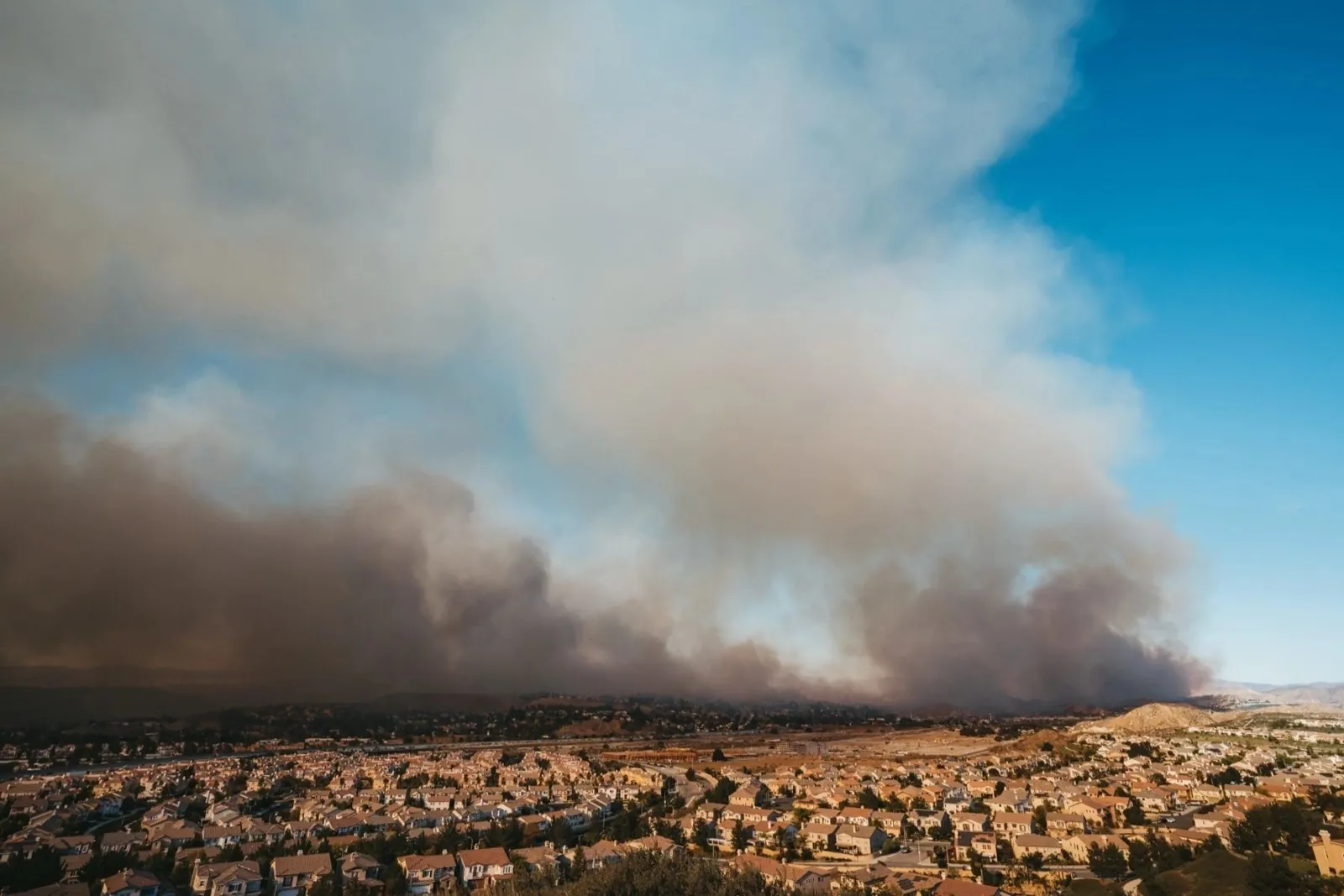
According to Spanish authorities, the wildfire spread rapidly through rugged terrain containing scattered homes and rural communities.
Several residents became trapped while attempting to escape during the night.
Authorities have identified six victims while continuing DNA analysis to identify additional victims because of the condition of the remains. A 93-year-old British woman later died in hospital from burn injuries, bringing the reported death toll to thirteen. Seven people were injured and around 7,000 hectares were burned before the fire was stabilised and evacuation orders were lifted. Reuters
The event represents one of Spain’s most serious wildfire disasters in more than forty years.
A wildfire can quickly become an escape crisis
Wildfire discussions often focus on flames.
In reality, people are rarely harmed simply because fire exists.
People become vulnerable when fire moves faster than information, faster than response assets and faster than safe evacuation.
Rural communities present unique challenges.
Homes may be separated by hundreds of metres.
Road networks may be narrow.
Mobile coverage may vary.
Visibility may disappear within minutes.
Smoke, wind shifts and steep terrain can transform familiar roads into dangerous escape routes.
Once evacuation routes become compromised, responders face an entirely different operational problem.
The challenge is no longer only suppressing the fire.
It is helping civilians survive long enough for suppression to matter.
A wildfire becomes most dangerous when flames move faster than information, authorised response assets and civilian escape. Effective readiness must strengthen all three—not only suppression.
Wet seasons can create dangerous summers
One of the important observations highlighted by Spanish authorities concerns vegetation.
Experts noted that unusually heavy spring rainfall encouraged significant vegetation growth across parts of southern Spain.
When prolonged summer heat arrived, that vegetation dried, creating abundant fuel that allowed the fire to spread rapidly. Reuters
This sequence illustrates an important lesson.
Wildfire risk is not determined by drought alone.
Periods of above-average rainfall may unintentionally increase later wildfire intensity if vegetation growth is followed by prolonged drying.
For emergency planners, vegetation management, seasonal monitoring and preparedness become as important as responding once ignition occurs.
Suppression is only one part of readiness
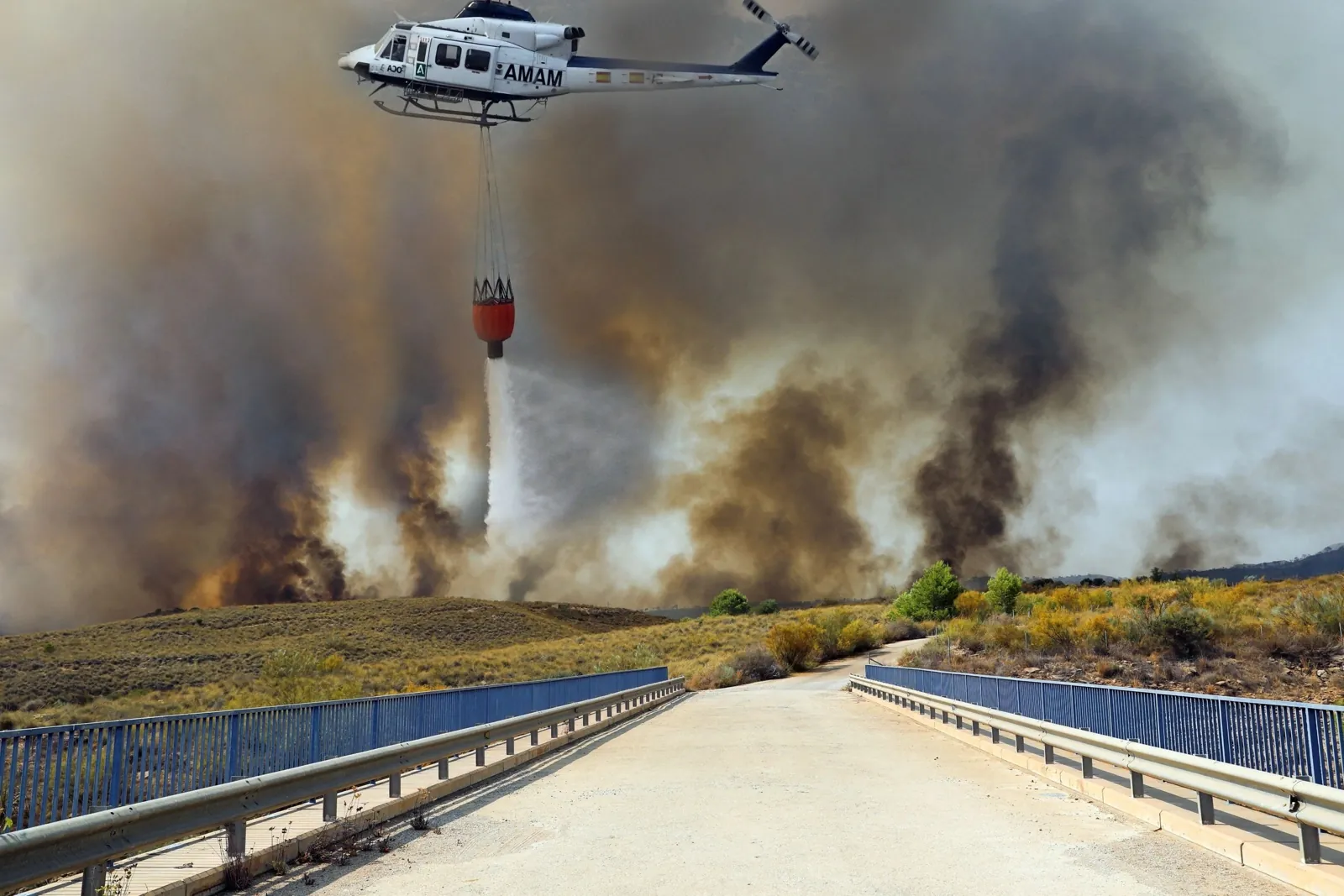
Aircraft, helicopters and firefighters remain essential.
But suppression alone cannot solve every challenge.
Modern wildfire readiness also depends upon:
- understanding changing terrain conditions;
- identifying vulnerable communities before ignition;
- maintaining operational awareness;
- coordinating authorised resources;
- communicating effectively with affected populations;
- assessing conditions after interventions;
- and sustaining response capability throughout prolonged incidents.
Wildfire response is therefore a continuous operational cycle rather than a single event.
Each decision influences the next.
Why positioning and operational visibility matter
Remote terrain creates unavoidable delays.
When responders must travel significant distances before operations begin, valuable time can be lost.
This does not mean every community can have permanent response assets nearby.
Rather, it highlights the importance of planning how authorised capabilities may be positioned closer to elevated-risk areas during critical periods.
Operational visibility is equally important.
Decision-makers need reliable information regarding:
- evolving fire behaviour;
- terrain accessibility;
- Infrastructure exposure;
- changing weather conditions;
- available response assets;
- and civilian movement.
Without timely operational awareness, decisions become increasingly difficult as conditions deteriorate.
Every response should be followed by assessment
Suppressing part of a wildfire does not necessarily conclude the incident.
Conditions continue changing.
Wind direction may alter.
Hotspots may remain.
New ignition points may develop.
Response therefore requires continuous assessment.
Authorities benefit from understanding:
- what intervention occurred;
- how conditions changed afterwards;
- whether additional action is required;
- where resources should be directed next;
- and what uncertainties remain.
This continuous assessment helps support more informed operational decisions while maintaining accountability throughout the emergency.
Human command remains essential
Technology continues advancing rapidly.
However, wildfire emergencies remain fundamentally human-centred.
Emergency commanders.
Firefighters.
Civil protection authorities.
Pilots.
Medical teams.
Police.
Local governments.
These professionals remain responsible for making complex operational decisions under extreme pressure.
Emerging technologies should therefore strengthen—not replace—authorised command structures.
Human oversight, legal accountability, coordinated communications and established emergency procedures remain indispensable components of responsible wildfire response.
The PRAESI perspective
PRAESI is being developed around this broader understanding of wildfire readiness.
Rather than focusing on a single technology, PRAESI is pursuing an integrated wildfire-response architecture that brings together:
- forward field deployment;
- autonomous aerial suppression capability;
- operational sensing;
- structured coordination;
- post-action assessment;
- repeatable turnaround and redeployment;
- operator supervision;
- and accountable operational reporting.
The objective is not to replace firefighters or emergency services.
Nor is it to suggest that technology alone can prevent tragedies like Almería.
Instead, the long-term objective is to support authorised responders with better operational awareness, improved readiness and more structured response workflows before, during and after wildfire incidents.
PRAESI continues to follow a staged proof-build and validation pathway, with sensitive technical information disclosed only through appropriate channels.
Questions every wildfire readiness strategy should ask
The Almería tragedy encourages broader reflection.
Future preparedness efforts may benefit from asking:
- Which communities have the greatest evacuation challenges?
- Which routes are vulnerable to rapid fire spread?
- How quickly can authorised response assets reach remote terrain?
- What information reaches emergency commanders during rapidly changing conditions?
- How are suppression actions assessed?
- Can operational capability be sustained over multiple response cycles?
- How are decisions documented for later review?
- How can emerging technologies integrate responsibly within existing command structures?
These questions extend well beyond any individual wildfire.
They are questions about resilience.
Looking forward
Nothing can undo the lives lost in Almería.
No technology can eliminate wildfire risk.
No response system can guarantee a different outcome in every emergency.
Yet responsible innovation has an important role.
Its purpose is to help authorised responders gain better information, improve preparedness, strengthen coordination and support more informed decisions before the next emergency develops.
As wildfire seasons across Southern Europe become increasingly demanding, readiness will depend not on any single capability but on how effectively people, procedures and technologies work together.
That remains the challenge—and the opportunity—for future wildfire resilience.
Frequently Asked Questions
What made the Almería wildfire particularly dangerous?
Authorities reported that rapidly spreading fire, rugged terrain, scattered homes and difficult escape conditions contributed to the tragedy, while unusually heavy spring vegetation later became dry fuel during extreme summer heat. Reuters
Why is wildfire evacuation readiness important?
Wildfire emergencies can evolve faster than expected. Planning evacuation routes, maintaining situational awareness and communicating clearly are important components of overall emergency preparedness.
How can integrated wildfire-response systems support authorities?
Integrated systems may help improve operational awareness, resource coordination, assessment and response planning while supporting existing emergency command structures.
Does autonomous wildfire technology replace firefighters?
No. Human decision-making, emergency command and authorised responders remain central to wildfire operations. Technology should support—not replace—professional emergency services.
What is PRAESI developing?
PRAESI is developing a patented integrated wildfire-response architecture that combines field deployment, aerial suppression, sensing, operational coordination, post-action assessment, repeatable turnaround and operator oversight within a structured response framework.
Request a PRAESI Briefing
PRAESI engages with civil-protection authorities, utilities, forestry organisations, infrastructure stakeholders, OEM/platform partners, strategic collaborators and investors exploring accountable wildfire-response systems.
To learn more about PRAESI’s approach, visit **https://praesi.ai/contact**.
Source Note: This article contains independent commentary and analysis inspired by Reuters reporting published on 13 July 2026 concerning the deadly wildfire in Almería province, Spain. All original reporting rights remain with Reuters and the credited journalists. Reuters