Wildfire News
‹ All PostsHeatwaves Are Turning Wildfire Response Into a Readiness Problem
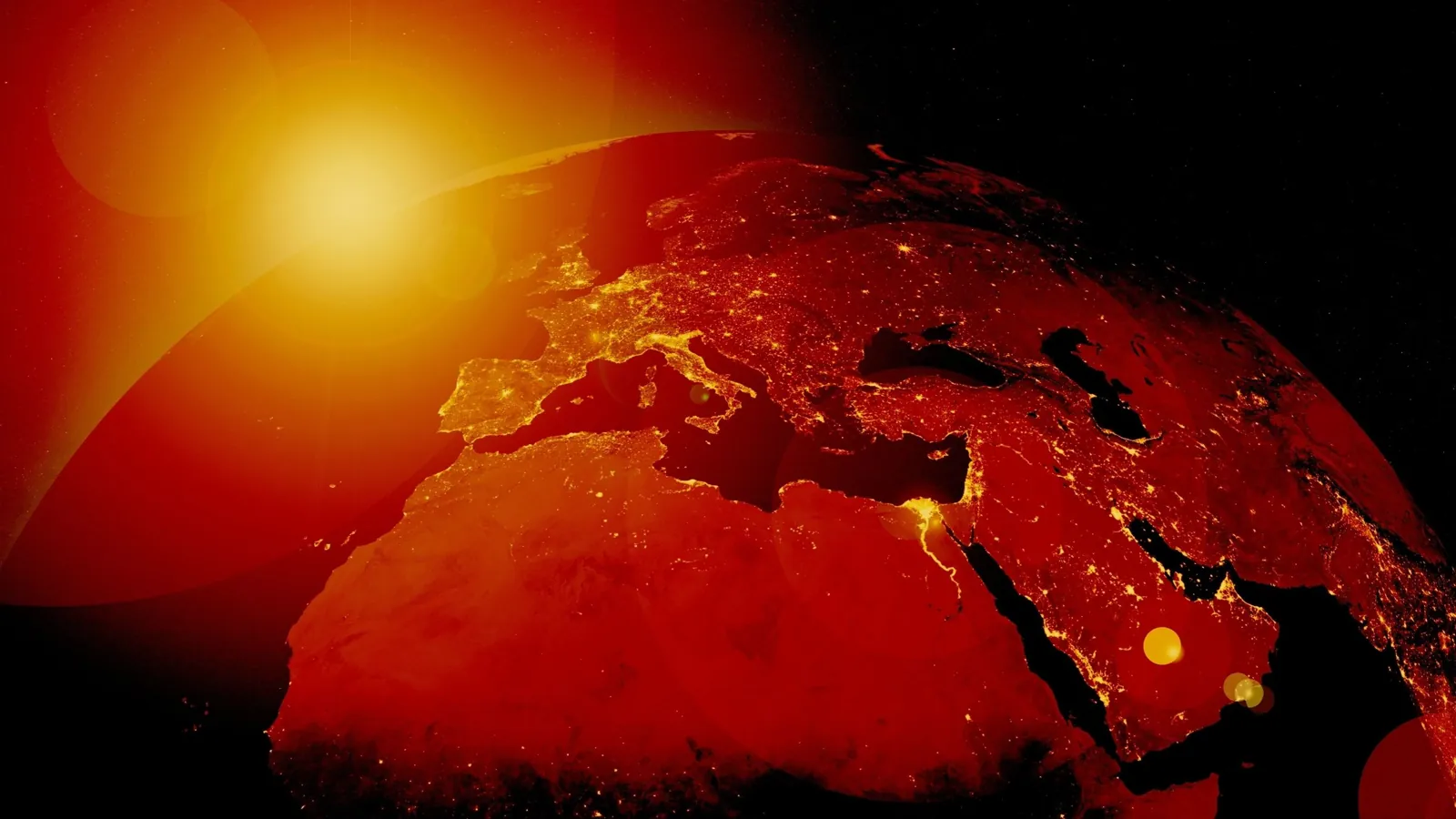
For wildfire-risk stakeholders, the lesson is not simply that temperatures are rising. The lesson is that heat-driven fire conditions can quickly expose weaknesses in preparedness, coordination, deployment, visibility, and repeatable response.
That turns wildfire response into a readiness problem.
Heatwave conditions create compound operational pressure
When heat intensifies across a region, wildfire risk does not rise in isolation. Multiple pressures can develop at the same time.
Vegetation may become more flammable. Power systems can face increased load. Critical infrastructure may become more exposed. Fire-response authorities may have to prepare for multiple ignition points across different terrain types. Health systems may already be under strain from heat-related illness. Roads, communications, and public services can become part of the emergency context rather than neutral background conditions.
The Joint Research Centre’s wildfire situation update for June 24, 2026, reported 108,709 hectares burned in the EU since the start of the year and 921 fires detected, more than double the long-term average number of fires for that point in the year. Its fire danger forecast also showed very extreme Fire Weather Index anomalies across parts of central Europe, the western Balkans, Italy, and other regions for the late-June to early-July period.
This matters because public agencies, utilities, forestry stakeholders, and infrastructure owners cannot treat wildfire response as a single moment of action. They need response capacity that can be positioned, activated, supervised, assessed, and repeated.
The limits of isolated tools
A single aircraft does not solve wildfire response. Neither does one sensor, one drone, one software dashboard, or one alert feed.
Each may be useful. But wildfire response depends on the connection between them.
The operational challenge is the full chain:
- detecting or understanding the risk environment;
- moving response capability closer to high-risk terrain;
- launching appropriate suppression or assessment assets;
- maintaining visibility for operators;
- understanding what happened after an action;
- turning assets around for repeatable use;
- supporting accountable decisions under pressure.
When these elements remain disconnected, response can become fragmented. Information may not translate into action. Assets may not be positioned where they are most useful. Operators may lack a structured view of what has happened, what remains uncertain, and what can be done next.
The future of wildfire response will depend less on isolated capability and more on integrated readiness.
Key insight: Heatwave-driven wildfire risk is not only a climate signal. It is a test of whether response systems are staged, visible, repeatable, and accountable before conditions escalate.
Field deployment is central to readiness
Wildfire response is shaped by distance, access, terrain, and time.
In high-risk areas, especially remote forests, utility corridors, mountainous regions, and mixed rural-infrastructure zones, the delay between ignition, confirmation, mobilisation, and action can be decisive. This does not mean every location can be covered equally. It means response planning must consider how capability can be placed closer to risk before a fire becomes harder to manage.
Field deployment is therefore not a secondary detail. It is part of the response system itself.
For civil protection authorities, field deployment supports speed and coordination. For infrastructure owners, it can help bring response capability closer to exposed assets. For forestry and land-management stakeholders, it can support readiness in difficult-access terrain where traditional response routes may be constrained.
PRAESI’s platform positioning reflects this system-level requirement. The company describes its wildfire-response system as combining field command infrastructure, autonomous aerial suppression assets, sensing, repeatable turnaround, and operator oversight into a coordinated response architecture.
Sensing must connect to action and assessment
Sensing is often discussed as if detection alone is the breakthrough. Detection matters, but in wildfire response it is only valuable when it connects to operational decision-making.
A useful sensing layer should help clarify what is happening, where uncertainty remains, and what operators need to understand before and after response activity. In a serious public-safety context, sensing should not exist as a disconnected data stream. It should support the response workflow.
This is especially important after suppression activity. Post-action assessment can help operators understand whether an action had the intended effect, whether follow-up is required, and how the next response cycle should be considered.
For PRAESI, this point is central. Public materials describe system-level sensing and post-action assessment at a concept level, while keeping sensitive technical logic restricted. That balance is important: the public message can explain the role of assessment without revealing implementation detail.
Repeatable turnaround matters during prolonged risk
Heatwave periods can last for days. Fire danger can remain elevated even when one incident is contained. Multiple locations may require readiness at the same time.
That makes repeatable turnaround a critical concept.
Wildfire response is rarely one action. Systems may need to return, recharge, reload, reassess, and redeploy. If that cycle is not considered from the beginning, capability can look strong in theory but become limited under sustained operational pressure.
For public-sector and infrastructure stakeholders, repeatability supports planning. For investors and strategic partners, it also clarifies why wildfire response should be evaluated as a system architecture rather than as a single product feature.
PRAESI’s public platform materials specifically reference repeatable readiness, deployment, action, assessment, and redeployment concepts as part of the broader system pathway.
Operator oversight is not optional
Autonomous capability in wildfire response must be framed carefully.
In a public-safety environment, autonomy should not mean removing human responsibility. It should mean supporting operators with structured capability, clearer information, and more disciplined workflows. Decision-making, supervision, accountability, and operational visibility remain essential.
This is particularly relevant for civil protection authorities, utilities, forestry organisations, OEM partners, and investors evaluating emerging wildfire-response technology. Systems intended for high-risk environments must be built around oversight from the start, not added later as a communications layer.
PRAESI’s public positioning is aligned with this principle. The company presents operator oversight as part of its integrated wildfire-response architecture and states that public materials remain deliberately high-level, with sensitive technical and deployment details shared only through controlled disclosure.
What this means for wildfire-risk stakeholders
For civil protection and fire-response authorities, heatwave-linked wildfire risk increases the need for faster positioning, coordination, and operational accountability.
For utilities and critical infrastructure owners, the concern is not only wildfire in forests. It is wildfire near power corridors, substations, telecom infrastructure, transport links, and other exposed systems.
For forestry and land-management stakeholders, the challenge is often difficult terrain, changing wind, smoke, access constraints, and the need for repeatable response visibility.
For OEM and platform partners, the opportunity is to contribute specialist components into a broader system rather than treating wildfire response as a standalone hardware market.
For investors and strategic partners, the key question is whether a company is building isolated capability or a staged, defensible, system-level pathway.
PRAESI’s “Who We Serve” positioning identifies these same stakeholder groups and frames the common need beneath them: faster field response, aerial suppression capability, clearer post-action assessment, and accountable operational oversight.
PRAESI’s perspective: readiness before scale
The next generation of wildfire response will not be defined only by faster alerts or more aircraft. It will be defined by how well response capability can be integrated before the emergency, activated during the incident, assessed after action, and repeated under continued pressure.
That is why PRAESI is being developed as an integrated wildfire-response system rather than a generic drone product or single-feature tool. The company’s current pathway is intentionally staged, with public materials describing the system at a high level while restricted technical, partner-integration, deployment, and diligence materials remain controlled.
In a Europe facing longer fire seasons, more heat stress, and more complex risk environments, readiness has to become more structured. The question is not only whether new tools can act. The question is whether the full system can support accountable response when conditions are changing quickly.
Conclusion
Heatwaves are making wildfire response more demanding across regions, sectors, and institutions. The operational answer cannot be fragmented.
Wildfire-risk stakeholders need integrated systems that bring together field deployment, aerial suppression, sensing, post-action assessment, repeatable turnaround, and operator oversight. They need capability that is prepared before the incident curve accelerates.
PRAESI is being developed around that system-level challenge.