Wildfire News
‹ All PostsCan Sheep Slow Wildfires? The Case for Targeted Grazing
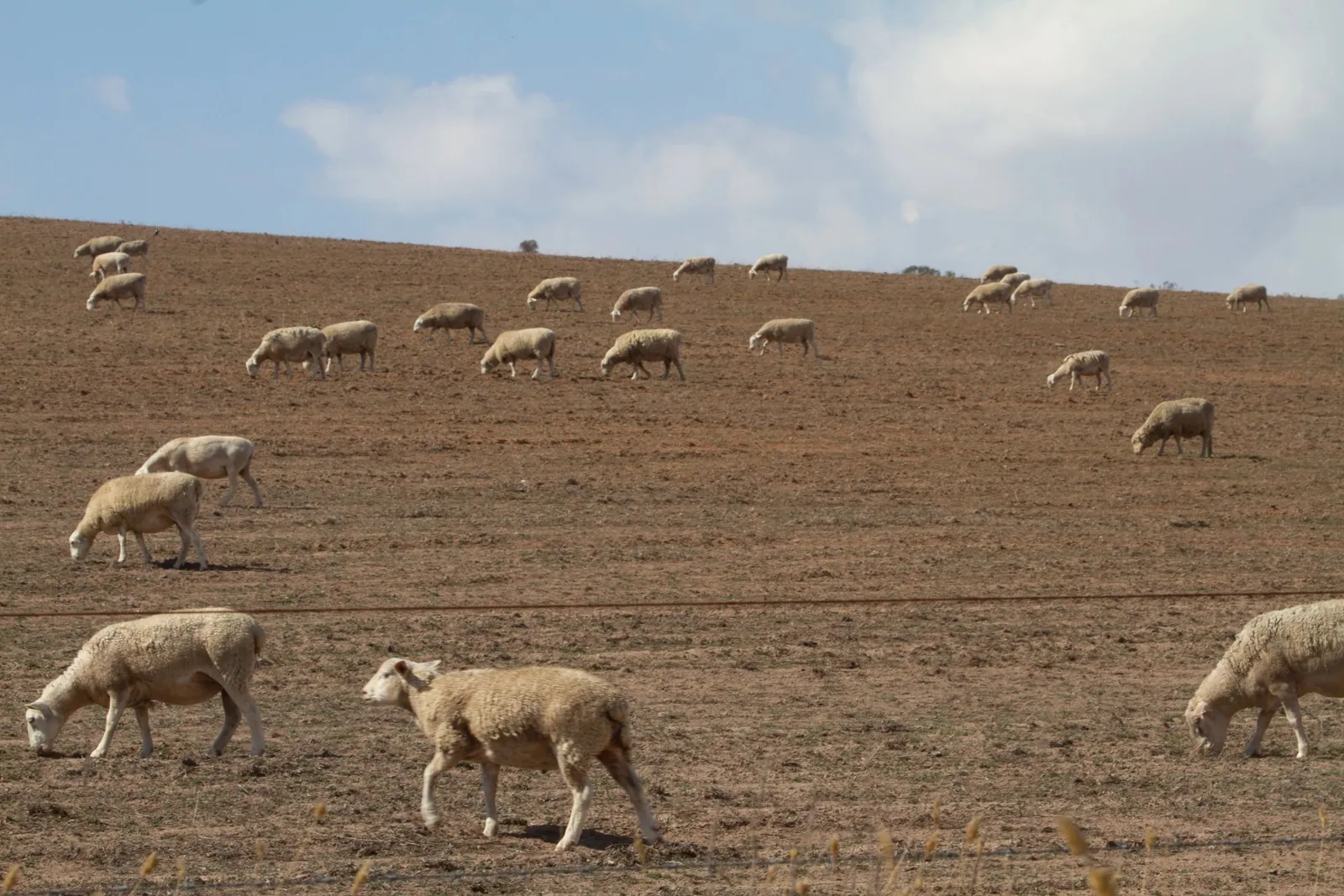
Sheep graze across a dry hillside. Illustrative stock photograph; not Bennett Ridge.
A flock of sheep is an unusual piece of fire equipment. It has no pump or thermal camera. Yet on the right ground, at the right time, grazing animals can remove the dry grass that lets a small ignition run.
That is the practical idea behind targeted grazing: livestock are placed on a defined site for a planned period to change the vegetation before fire season.
What happened at Bennett Ridge
An 18 September report in The New Yorker followed a community grazing project in Bennett Ridge, California. The 2017 Nuns Fire had destroyed much of the neighbourhood there.
The terrain behind some homes is steep and rocky, which makes mowing difficult. Prescribed fire near houses and vineyards brings a different set of concerns. Residents therefore organised a grazing co-operative.
In 2024, sheep and goats worked across 19 properties. The following year, 22 properties took part. A contractor first brought 340 goats in March, then returned in June with 600 sheep after late rain produced another flush of vegetation.
The physical work was punishing. The report says crews installed and removed 12,000 yards of temporary fencing during 23 days of summer grazing. Landowners paid $1,600 per acre, roughly comparable with local mechanical weed removal on larger properties. Animals needed water, supplementary feed, transport and handlers.
The change was visible. Chest-high grasses were cut down to a short layer after the flock moved through.
A former Cal Fire division chief modelled the same hypothetical ignition before and after grazing. In the pre-grazing scenario, flames were at least 20 feet tall and likely to reach tree canopies. After grazing, the model produced slower-moving flames about five feet tall, which firefighters would have a better chance of controlling. That is a site-specific model reported by The New Yorker, not a universal performance figure. The New Yorker, 18 September 2026.
What the animals actually change
Fire needs fuel. Annual grass can dry into a continuous surface layer that carries flame across open ground and towards shrubs, trees or buildings.
The University of California Agriculture and Natural Resources Fire Network defines targeted grazing as using livestock at a chosen season, intensity and duration to meet a vegetation goal. Grazing can reduce live fine fuels and some ladder fuels. It can also interrupt fuel continuity by leaving a more varied, patchy surface.
Different animals suit different vegetation. Sheep generally favour grasses and forbs on flat or moderately steep land. Goats are more willing to browse woody plants and can work on steeper slopes. Mixed groups can therefore address more than one fuel type.
Timing matters as much as appetite. Graze too early and vegetation may grow back before the period of greatest danger. Graze too late and the forage may have little nutritional value. The number of animals, the size of each temporary paddock and the time spent there all affect the result. UC ANR Fire Network.
Useful, with clear limits
Sheep don’t eat their way through every wildfire problem.
UC ANR cautions that grazing does not remove dead woody fuel. Many shrubs resprout. A single visit rarely provides lasting control, and repeated grazing may be needed. Complex sites can require animals to open the lower vegetation before crews use prescribed fire or mechanical treatment.
There are operational constraints too. Contractors need fencing, water, animal transport, experienced handlers and predator protection. Toxic plants, loose dogs, ornamental landscaping and difficult access can add risk and cost.
This makes targeted grazing a treatment, not a guarantee. Its value lies in changing the conditions a fire meets. Less connected grass and lower fine-fuel loads can reduce the speed or intensity of a surface fire in suitable terrain. Wind, drought, slope, dead timber and spotting can still overwhelm a treated area.
Why the idea is spreading
California is not alone in treating pastoral work as part of fire prevention.
An EU-backed project in Portugal and Spain used grazing, mobile sheepfolds and virtual fencing to maintain firebreaks and manage biomass across more than 3,300 hectares. The European Climate, Infrastructure and Environment Executive Agency reported grazing costs as low as €60–80 per hectare in parts of the project, compared with about €1,000 per hectare for manual fuel management. Those figures belong to that programme and should not be transferred directly to other regions. European Commission: LIFE fire-prevention project.
Portugal went further in February 2026, approving a national support programme for extensive grazing as a way to reduce rural fuel loads. The programme allows up to €30 million a year from the Environmental Fund, including indicative support of €30 per sheep or goat in eligible areas. Government of Portugal.
These programmes recognise an awkward fact that fire policy can miss: keeping land in a safer condition is continuous work. A fuel break cleared once will grow back. Maintained ground needs people, animals, access and a reason for the work to continue.
The PRAESI perspective: prevention changes the first minutes
Targeted grazing sits upstream of detection and suppression. It cannot tell an operator where an ignition has started, and it cannot attack a flame front. It can change what happens after ignition by giving fire less continuous fine fuel to cross.
That matters to any response system. A slower, lower-intensity fire may leave more time to verify an alert, position equipment and protect an exposed edge. But a grazing plan must still connect with mapping, weather information, access routes and the local fire authority’s wider fuel strategy.
PRAESI is developing a wildfire-response system that links sensing, autonomous aerial suppression and operator oversight. The Bennett Ridge example reinforces the case for layered preparedness: fuel treatment before an incident, early information when one begins and a response that can be directed and repeated. PRAESI was not involved in the projects described here, and the performance of its system must be established through testing and operational validation.
Sheep are not replacing firefighters. They are doing quieter work before the sirens start.
Frequently asked questions
Can sheep stop a wildfire?
No general claim can be made that sheep will stop a wildfire. Managed grazing can reduce particular fuels and may lower fire intensity or rate of spread on a suitable site. Outcomes depend on vegetation, terrain, weather, treatment timing and maintenance.
Are goats better than sheep?
They eat different plants. Sheep are generally effective on grass and forbs. Goats tend to browse more shrubs and can work on steeper ground. A prescription should match the animals to the vegetation.
Is grazing a one-time treatment?
Usually not. Grass and shrubs regrow. Some sites need repeat visits, while others combine grazing with mowing, mechanical thinning or prescribed fire.
Does grazing replace defensible space around buildings?
No. Property owners should follow the requirements and guidance of their local fire authority. Grazing may support a broader vegetation plan, but it does not replace building-specific work, evacuation planning or emergency response.
Source note
Prepared on 19 September 2026 from The New Yorker report published on 18 September, guidance from the UC ANR Fire Network, the European Commission’s LIFE project summary and the Portuguese government’s February 2026 programme announcement. Project figures are attributed to their original contexts and are not presented as universal results.