Wildfire News
‹ All PostsAmazon's Carbon Deficit: When Fire Outweighs Forest Uptake
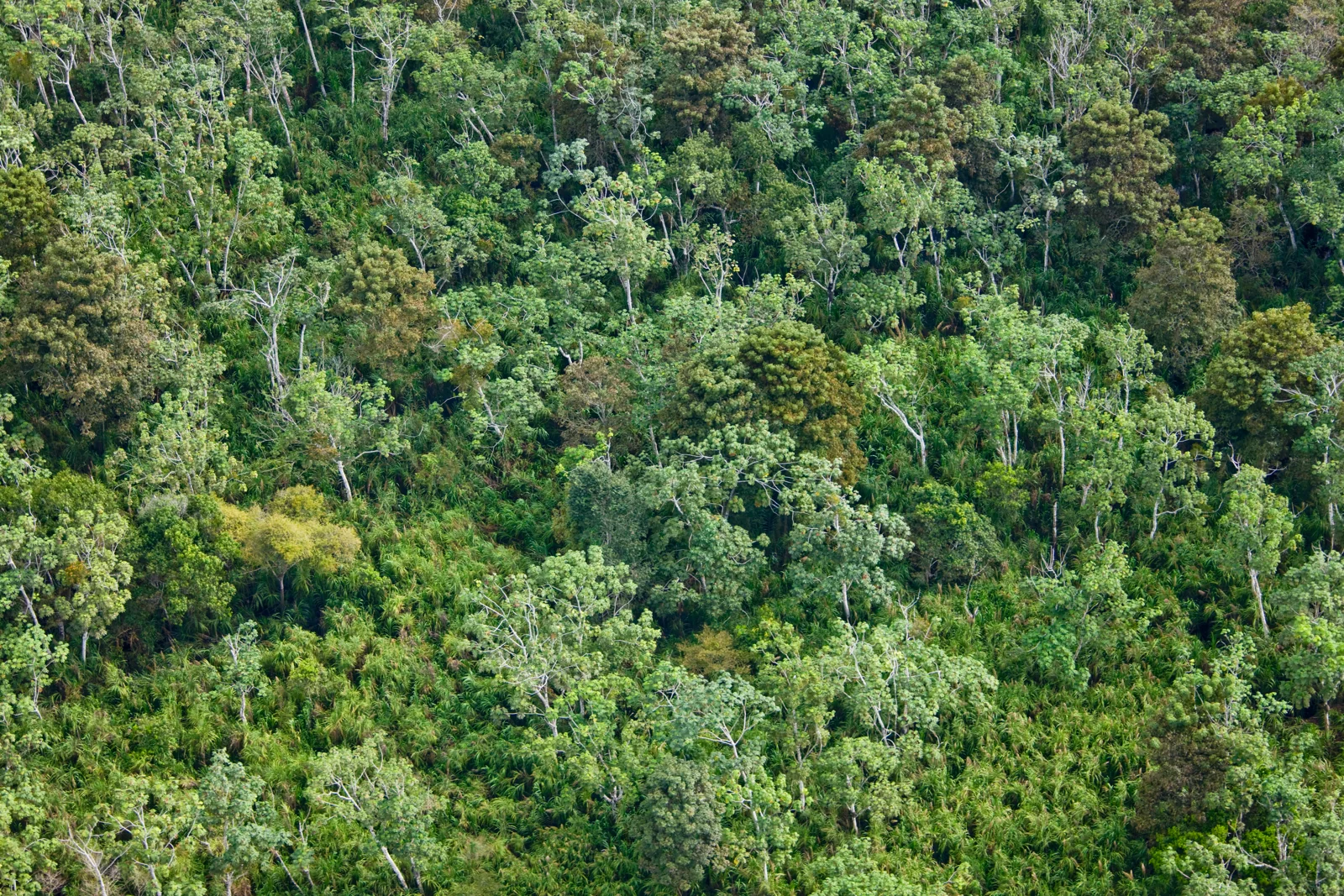
Amazon rainforest near Manaus, Brazil. Illustrative stock photograph, not a photograph of a fire or a study sampling site. Photo: AltrendoImages / Envato.
The Amazon can look unbroken from above while its carbon balance tells a different story. A new study puts that gap at about 1.17 billion tonnes of CO₂ a year: the amount the region released, on average, beyond what it absorbed during 2010–2024. Fire was the dominant source.
The finding comes from research published in Nature on 21 October, led by Luciana V. Gatti and colleagues. Preventing forest fires is part of keeping the Amazon’s stored carbon in the forest.
What the billion-tonne figure means
The figure describes an estimated annual net balance across a 15-year study period. It is neither a forecast for 2026 nor a single fire season’s total.
The paper reports carbon mass. FAPESP’s account, republished by Phys.org, expresses the findings as CO₂: fire emissions averaged approximately 1.47 billion tonnes annually, while net uptake outside the fire component offset roughly 300 million tonnes. The difference was a net release of around 1.17 billion tonnes each year. These are rounded estimates with uncertainty, rather than an exact inventory of every fire.
Trees were still taking up carbon. The problem was that this uptake could not compensate for the emissions. Calling the region a net source does not mean every patch of forest was emitting more than it absorbed, or that photosynthesis had stopped.
Measuring what leaves the forest
The researchers analysed air collected by aircraft across four Amazonian sampling regions. Their record included 1,017 vertical profiles over 2010–2024, measuring carbon dioxide alongside carbon monoxide, which helps identify the contribution from burning.
That offers a different view from a satellite image of flames. The measurements track gases carried through the atmosphere, allowing the team to estimate the regional carbon balance and separate the fire contribution. Results varied across the Amazon and between years. The authors stress that long records and broad geographical coverage matter when assessing the region’s role in the carbon cycle.
Their analysis also separated wetter years with less human disturbance from periods of heavier land-use pressure and from hot, dry years. Human disturbance was associated with substantial emissions even under relatively mild climate conditions. Drought amplified the damage from burning. Waiting for rainfall alone cannot address the land-use pressures identified in the study.
A fire can disappear beneath the canopy
An Amazon forest fire need not resemble a wall of flames moving through treetops. NASA’s account of understory fires describes burning beneath dense canopy that can be difficult for satellites to detect. During drought, fires can escape their intended boundaries and enter standing rainforest.
That makes assessment harder. Forest that still looks green from above may already have fire moving beneath it. Different satellite sensors offer different levels of detail and revisit times; no single image provides continuous coverage of everything happening below the canopy.
The damage can outlast the smoke. NASA’s explanation of repeated Amazon fires describes how even relatively small fires can kill vulnerable trees. Gaps left by fallen trees admit sunlight and dry the forest floor, making later burning more likely. A low flame is not necessarily a small loss.
Prevention belongs in the response plan
The Nature study strengthens the case for reducing human-caused burning alongside stopping deforestation and restoring damaged land. It does not test a particular firefighting technology or calculate how much carbon an individual suppression mission would save.
For response planners, the implication is practical: an alert needs to lead to a checked location and an assessment that crews can use. Access and local knowledge matter before a response is authorised. After action, somebody still needs to establish what happened on the ground. Counting detections alone cannot show that a forest was protected.
PRAESI is developing an operator-supervised wildfire-response system with human authorisation and outcome verification in its intended response chain. The Amazon research gives that work a wider context. Protecting living forest also means protecting the carbon it holds, including where damage is hard to see from above.
Read More / Sources
- Gatti, L. V. and colleagues, Nature: Amazon carbon emissions driven by human actions amplified by droughts, published 21 October 2026. DOI: 10.1038/s41586-026-11168-1.
- Phys.org / FAPESP: source reporting by Luciana Constantino, 22 October 2026.
- NASA Earth Observatory: drought and understory fires in the Amazon, 2023.
- NASA Earth Observatory: how repeated fires damage Amazon forest and increase its vulnerability to burning.